
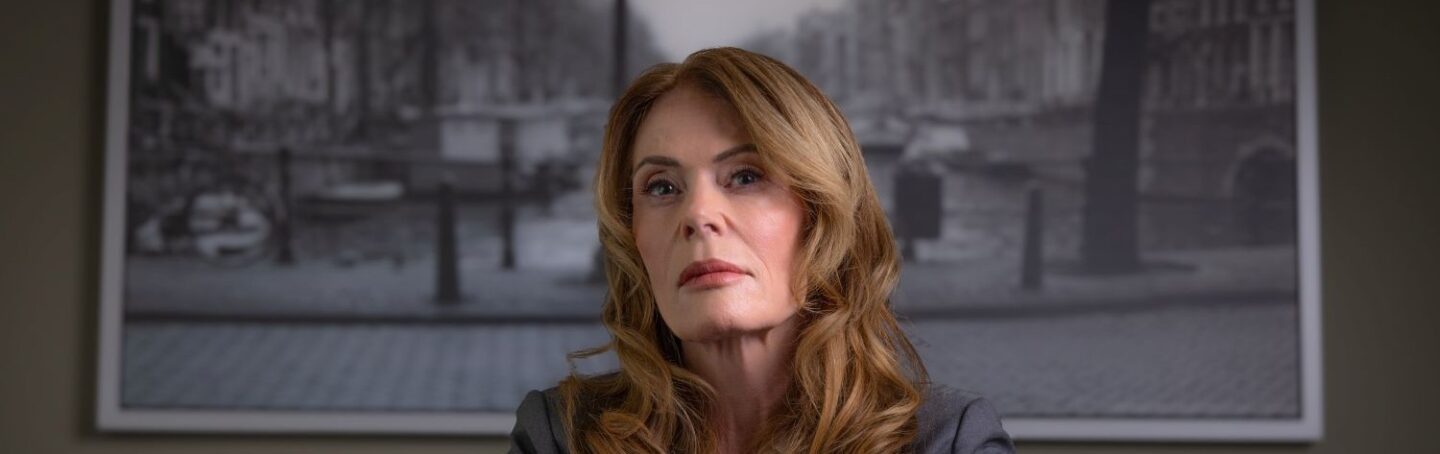
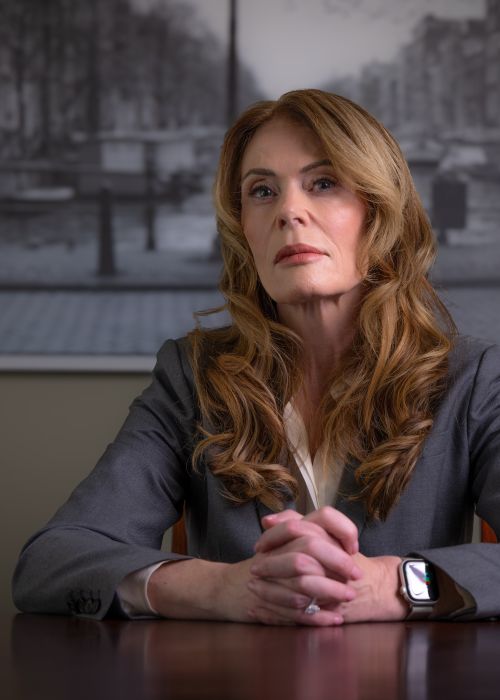
In June 2020, when much of America was still sanitizing groceries and wiping down Amazon boxes, Dr. Monique Yohanan was making a different kind of call. She had just finished reviewing the rapidly emerging evidence on COVID-19, and was preparing to present formal national treatment guidelines in front of her board at Change Healthcare. Wary of running counter to stricter public health recommendations at the time, the executive board hesitated, telling her, “We’re not sure if the science is there.”
Dr. Yohanan didn’t blink. “No, it is. We are good to do this,” she responded.
The guidelines she wrote that summer were later used in hospitals caring for millions of people. She told IW Features that that moment––where she had to stand on the evidence and not the mood of the cultural moment––shaped her future in ways she never could have imagined.
The experience posed a pivotal question: What happens when the public narrative about medicine no longer aligns with the science?
For most of her career, Dr. Yohanan was precisely the kind of expert the medical establishment clamors for: a Brown-trained physician, with a Master’s in public health from Johns Hopkins, an Internal Medicine residency in the Harvard system, a Geriatrics fellowship at Stanford, faculty appointments at both University of California, San Francisco and Stanford, a decade inside Medicaid systems, and 20 years of writing evidence-based medical guidelines used at the national level.
But then she did something almost no one in her position does. She started questioning the dogma around vaccines––not as a contrarian or activist, but as a doctor who saw the data and didn’t like how it was being sold to the public.
“I come at this as a mom. I come at this as a physician. And I come at this as somebody trained in public health,” she told IW Features. “Vaccines are incredibly important, but they are not all equally important and they are not all equally necessary.”
That one sentence draws a major boundary line in American public life, but it shouldn’t. In a culture now divided into “trust the science” absolutists and “never again” skeptics, Dr. Yohanan is driving into the lane the county no longer remembers how to follow: the lane of humility.
There are no anti-science vibes coming off of Dr. Yohanan. She loves vaccines. In fact, she called them “one of the greatest successes in public health of all time.” But, she’s also the kind of grounded, no-nonsense person who will tell you exactly which vaccines prevent community transmission––and which ones don’t, and never did.
“Vaccines properly thought of for a disease like measles are a hammer putting a nail in––a perfect tool,” she explained. “Vaccines for some of the other things that we’re using right now, they are a hammer putting a screw into the wall. They’re the wrong tool and they mess up the wall.”
This is the core of Dr. Yohanan’s work at Independent Women, where she recently joined as a Senior Fellow specializing in healthcare. Her white paper, “Rethinking Vaccine Policy,” is a correction to a health culture that is overly stubborn about ideology when it should be rooted in evidence. It’s also the first major piece in Independent Women’s growing catalogue of work on Making America Healthier, which begs the question that public health officials have long avoided: When it comes to Americans’ health, are we doing what works, what’s logical, or what’s just routine and the path of least resistance?
“I think vaccines are important, but I also think that we need to acknowledge that right now we are giving too many vaccines, we are giving them to kids too young, and we’re not respecting parents in the process,” she said bluntly.
Dr. Yohanan’s approach is equal parts clinical and maternal, built without posturing or partisan sermonizing. She simply refuses to treat parents as an enemy of public health when they are reasonably skeptical of questionable narratives.
But her skepticism didn’t begin on the internet; it began while nose-deep in the literature.
While writing COVID-19 guidelines, Dr. Monique noticed that what she read in peer-reviewed studies wasn’t lining up with the messaging served by public health officials on television.
“That sort of misalignment led me down a path to say, ‘Are there other issues where the messaging isn’t complete?’” she said.
And there were.
What she found wasn’t a single scandal––it was a continued pattern of shifting the Overton window. Vaccines originally designed to break transmission, for example, were being treated the same as vaccines that only protect the individual. Importantly, parents weren’t being told the difference when their children were expected to get dose after dose. Often, the conversation was reduced to two words, “Safe” and “Required.”
She decided it was time to rebuild the framework from scratch.
Based on her research, Dr. Yohanan categorizes vaccines into three tiers. First are Herd Immunity Vaccines (think measles, mumps, rubella, diphtheria, pertussis, varicella), which break transmission, protect the community, and require high uptake. Second are Hybrid Vaccines (think pneumonia, Hib, meningococcus), which protect the child and may reduce transmission but don’t create herd immunity. Third are Individual Protection Vaccines (think tetanus, flu, COVID, rotavirus, Hep A, inactivated polio), which protect one person alone, and not the population.
Her point in categorization is not to say that any vaccines are useless––it’s to say they’re different and that pretending otherwise is dishonest. That’s where her now-famous seatbelt analogy comes in.
“If a principal saw me driving my kid to school without a seatbelt, they could give me a lecture. But they don’t get to say, ‘Your kid can’t attend school anymore.’” That, she argues, is precisely what we do with vaccines that don’t affect anyone but the child who did or didn’t receive them.
She’s not asking America to abandon vaccines. She’s asking leaders to tell the truth about them.
Very few in the vaccine-policy debate have Dr. Yohanan’s caliber of resume and a matched willingness to challenge the script. She’s not an outsider, she’s the doctor who wrote the rules––and now wants them updated. She also refuses to hide behind jargon, saying the quiet parts plainly.
“We talk a lot about shared decision-making in medicine, and I don’t know that there’s a lot of sharing in the way that we currently approach vaccines,” she said, noting how many parents are obligated to follow the lengthy vaccination schedule. “But the reality is that every intervention at scale has the potential to hurt some kids. We have obligations to each other as members of a community, but as parents, our primary obligation is to our children.”
Despite much of this conversation having been historically sealed off, Dr. Yonahan believes we can still rebuild trust in the system. She’s the kind of doctor who respects the public enough to explain the science, respects parents enough to trust them with choice, and also respects medicine enough to admit it is not infallible.
“We have a lot of successes with vaccines that we can point to,” she said. “But we’ve been doing it the same way for decades. If we want to deal with the outbreaks we have now, we have to make a change.”
And that’s where her “dose of humility” comes in. To Dr. Yohanan, the real crisis is not whether Americans will comply with the vaccination schedule, but whether the public health authorities we’re supposed to put our faith in can tell the truth at scale.
Dr. Yohanan doesn’t believe Americans should outright fear vaccines, nor worship them. She’s asking those in power to restore the one thing medicine cannot function without: trust. Parents, she insists, are not the barrier to public health. They’re the reason it exists.
And if the medical establishment ever wants to be believed again, it will have to start where she did in that pivotal moment in 2020, while preparing to present to her board: on the side of evidence, even when the room isn’t ready for it.